
Our story
Motto: "Together we win, divided we're slow"
Over the last 40 years intensive care medicine has become a fast advancing medical speciality all around the world and its impact in medicine in general is plausible. Critical care journals have high impact factors and scientific publications from the field appear regularly in the highest ranking medical journals. Emergency and critical care has become the core element of the hospital structure and it is also becoming more popular among medical students and getting publicity like never before. However, it is mainly true in the “West”.
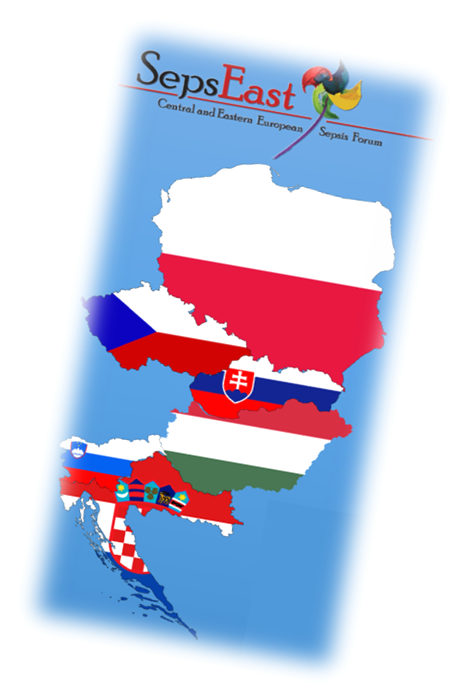
That is why in 2012 a group enthusiastic intensivists launched an initiative, what we called SepsEast, in order to bring Eastern European opinion leaders and Western European experts together on a conference in Budapest, Hungary. The reason for starting this initiative in Central and Eastern Europe was the recognition of the importance of the shared legacy that we brought from the former Soviet-block, which lead to similar problems in each country. Namely, intensive care in this region of Europe became severely underfunded, understaffed with very poor research activity as compared to our Western counterparts.The idea was welcomed by several societies and we decided to organize our conferences regularly and biannually.
SepsEast Conference was organized with great success in 2012, 2014, 2016 and 2018, but then COVID-19 pandemic came, and we had to focus on the daily fight for our patients at the bedside. However, we joined forces, organized online webinars in order to share experiences, to exchange views and strategies, to teach and learn, and we created a registry for research.
That is why in 2012 a group enthusiastic intensivists launched an initiative, what we called SepsEast, in order to bring Eastern European opinion leaders and Western European experts together on a conference in Budapest, Hungary. The reason for starting this initiative in Central and Eastern Europe was the recognition of the importance of the shared legacy that we brought from the former Soviet-block, which lead to similar problems in each country. Namely, intensive care in this region of Europe became severely underfunded, understaffed with very poor research activity as compared to our Western counterparts.The idea was welcomed by several societies and we decided to organize our conferences regularly and biannually.
SepsEast Conference was organized with great success in 2012, 2014, 2016 and 2018, but then COVID-19 pandemic came, and we had to focus on the daily fight for our patients at the bedside. However, we joined forces, organized online webinars in order to share experiences, to exchange views and strategies, to teach and learn, and we created a registry for research.

13
Conferences
300
Lectures
1550
Participants